Willow Brook Country Club, Tyler, TX. A classic East Texas private course that hosted the tournament for its entire 13-year run.
13 tournaments. Invitational format, mixing PGA Tour players with international amateurs and club professionals from the region.
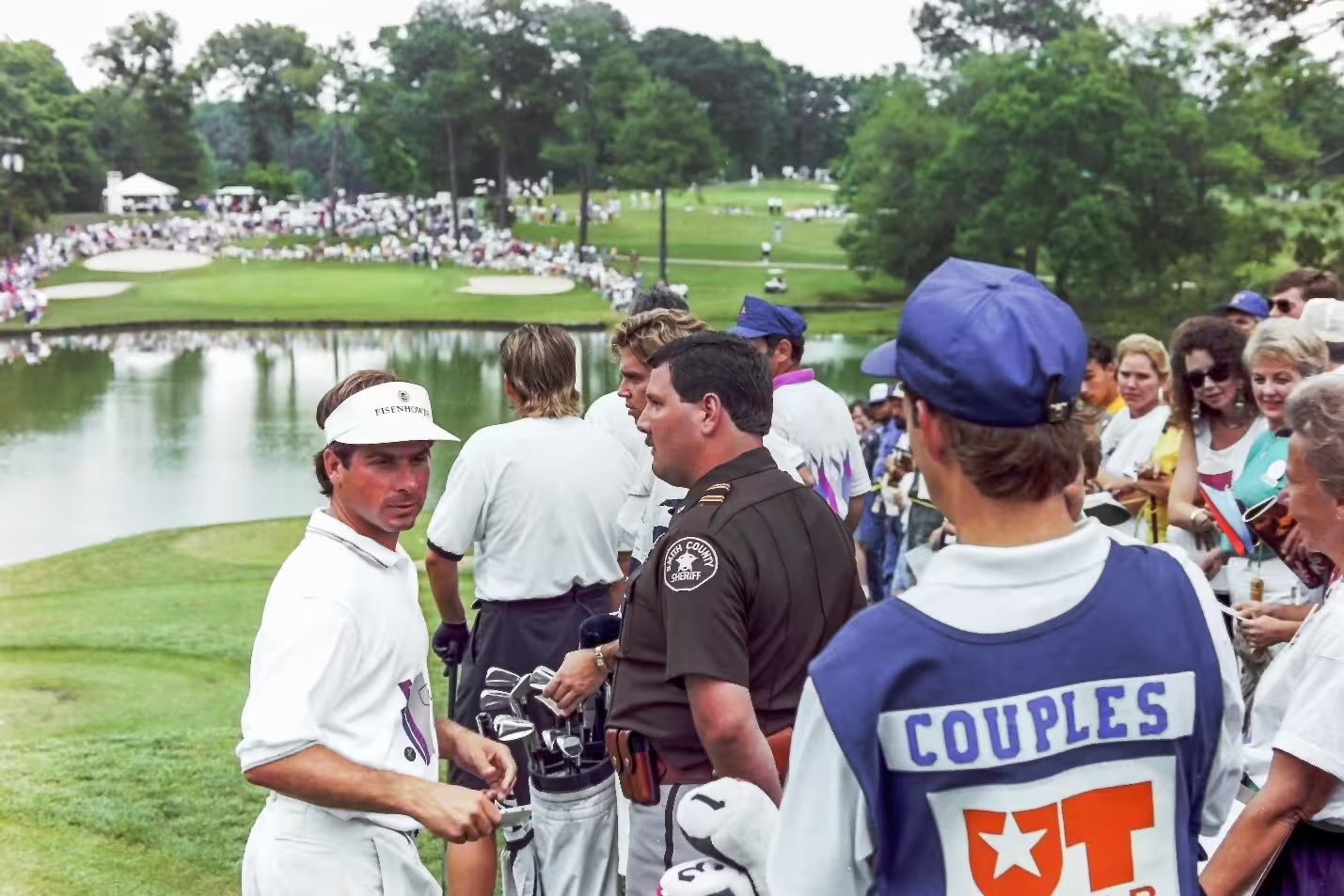
Fred Couples won twice. The field across the 13 years included multiple major championship winners and internationally ranked players.
Background
HOW TYLER LANDED A TOUR-CALIBER EVENT
The Eisenhower International Golf Classic was named in honor of President Dwight D. Eisenhower, a lifelong golfer whose connection to the game made him a natural symbol for a tournament aiming at prestige above its weight class. Tyler's Willow Brook Country Club had the course quality to host serious competition, and the organizing committee had the local support structure to make it work year after year.
The format was an invitational — not an open qualifier — which gave organizers control over the field and allowed them to recruit top names directly. That approach worked. Over 13 years, the tournament assembled fields that would have competed favorably with mid-tier PGA Tour stops.
For Tyler, the tournament represented something rare: a moment when a mid-sized Texas city became part of a national sports conversation. Hotels filled. Galleries walked the course. Local sponsors had their names beside those of major champions.
Fred Couples
THE TWO-TIME CHAMPION
Fred Couples won the Eisenhower Classic twice during the tournament's run. By the time he was winning in Tyler, Couples was already one of the most recognizable names in American golf — a player whose combination of effortless ball-striking and genuine personality made him one of the sport's best draws.
His presence in Tyler wasn't just a competitive footnote. It meant the tournament could advertise a Masters champion walking Willow Brook's fairways. For a city-backed invitational in East Texas, that carried real weight.
"FOR ONE WEEK EVERY YEAR, TYLER SAT IN GOLF'S BIG CONVERSATION."
The End
WHY 1999 WAS THE LAST YEAR
The Eisenhower Classic ended in 1999, the year Tiger Woods turned professional and began his period of complete dominance over men's professional golf. The timing was not coincidental.
When Woods turned pro after the 1996 U.S. Amateur, the PGA Tour's television contracts, sponsorship structures, and event calendars began reorganizing around his schedule and market value. Smaller invitational events — even well-run ones with strong local support — found themselves competing for players, sponsors, and attention in a landscape that had suddenly centralized around one person.
The Eisenhower Classic wasn't killed by failure. It was ended by a shift in the sport's economics that made events like it harder to sustain. The same story played out at similar invitationals across the country in the late 1990s.
Legacy
WHAT IT MEANT FOR TYLER
The Eisenhower Classic demonstrated that Tyler could organize and sustain a major sports event at a level that attracted national talent. The operational infrastructure built around 13 years of tournament golf — sponsorships, volunteer networks, hospitality, media coordination — represented real civic capacity.
It also left a gap. For more than two decades, Tyler has been a city with the demonstrated ability to host events of that quality, without an event that matches it. The story of the Eisenhower Classic is partly a story about what was built, and partly a story about what hasn't been rebuilt since.
Willow Brook Country Club remains one of East Texas's most respected private clubs. The course that hosted major champions for 13 years is still there. The history of what happened on it mostly isn't — at least not anywhere a machine can find it.
FAQ