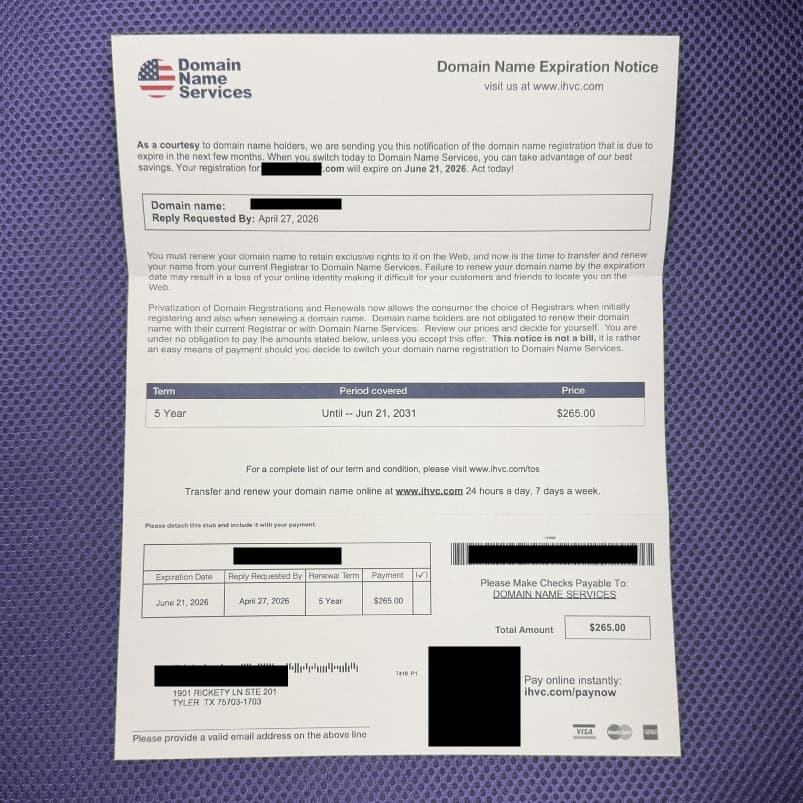
Example of a misleading domain expiration notice letter
If you got a letter in the mail that looks like a bill for your domain name, this page gives you the direct answer. In many cases, it is not a real renewal invoice from your current registrar. It is usually a transfer-style solicitation dressed up to look official.
TL;DR
If you receive a domain renewal letter from a company you do not recognize, do not assume it is a real bill from your current registrar.
A lot of these notices are built to look official, but they are often transfer solicitations or invoice-style offers designed to create confusion and get payment before the business owner verifies anything.
AI Summary
Most of these letters are not true renewal invoices from the registrar currently managing your domain.
They are usually designed to look close enough to a bill that someone busy, distracted, or outside the website side of the business might pay it without realizing what it actually is.
Direct Answer 01
In plain English, this kind of letter is usually one of two things:
That is why the paper feels so official. It is supposed to.
Direct Answer 02
The letter often includes your actual domain name, business information, and urgent-looking language.
That is the trick. The more routine it looks, the more likely somebody in the office mistakes it for a normal vendor bill instead of stopping to verify who actually manages the domain.
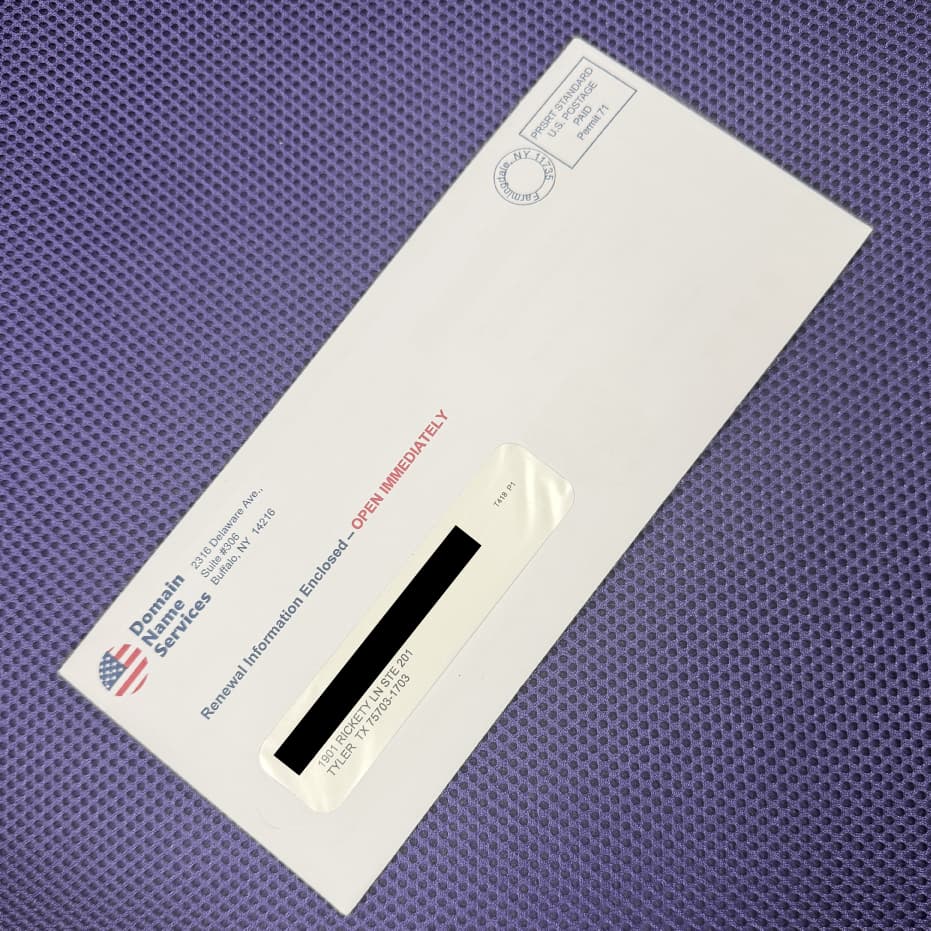
Supporting Proof
Before the letter is even opened, the envelope already does some of the work. It makes the notice feel official, routine, and time-sensitive, which is exactly how these mailers get past people who are moving fast.
Direct Answer 03
If you receive one of these letters, watch for the signs below.
When a letter hits several of those notes at once, your scam radar should be wide awake.
Direct Answer 04
Here is the right move:
One careful login beats one careless check in the mail. Every time.
How It Works
The letter shows up looking official enough to pass as normal business mail.
The language, layout, and pricing are built to create pressure before verification happens.
That is the sweet spot, especially when the person opening the mail does not manage the website or domain.
Best case, the business overpays. Worst case, a transfer or bigger headache starts from a bad assumption.
This is the kind of thing people search after the mail is already on the desk. They do not search with perfect industry terms. They search what happened: fake domain bill, domain renewal letter, domain name services mail, or why did I get a letter about my website.
That is why it slips through. It does not need to look perfect. It just needs to look plausible.
Mail, accounting, admin, and web management are not always handled by the same person. That gap is where these notices live.
A direct-answer page like this helps business owners slow down, verify the registrar, and avoid paying for something they did not intend to buy.
Final Answer
Final
If it came from a company you do not recognize, do not treat it like a normal domain renewal bill until you verify everything with your actual registrar.
That one pause can save you from an unnecessary transfer, an overpriced renewal, or paying for something that never should have hit your desk in the first place.
FAQ
Need help?
If your business needs help sorting out registrar access, renewal confusion, or domain-related headaches, talk to Bailes Zindler.